

Skip to content
24/7 Technical Support

EDR / XDR Endpoint Security

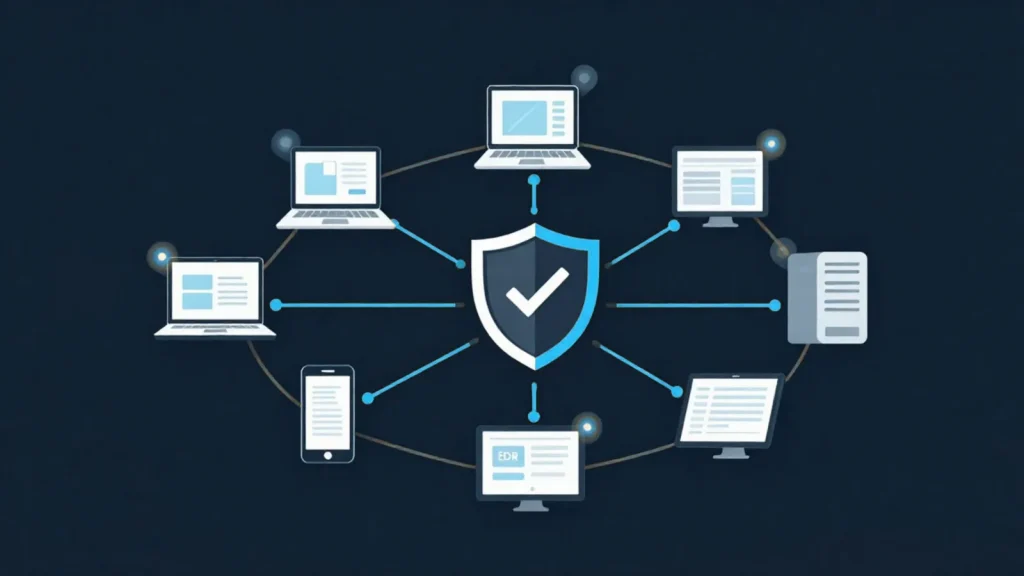
Modern cyberattacks now target user computers and servers. With MAV Cloud EDR/XDR, all of your endpoints are protected by advanced behavioral analysis and AI-powered threat detection technologies.

EDR / XDR uç nokta güvenliği
Service details

Our Endpoint Security (EDR / XDR) service

Instead of solutions that work like traditional antivirus, we use EDR/XDR platforms that analyze attacks based on behavior, detecting ransomware, malware, fileless attacks and unauthorized access attempts in real time.

A centralized management console lets you monitor all endpoints from one place, and automatic isolation is applied when needed to stop an attack from spreading.

Get a custom quote

Tell us what you need, and our expert team will get back to you as soon as possible.

Why MAV Cloud?

Why MAV Cloud Endpoint Security (EDR / XDR)?

EDR vs. XDR vs. MDR: from antivirus to managed detection

Endpoint security products fall into four layers. Antivirus (EPP) blocks known malware at the file level. EDR (Endpoint Detection and Response) records process, network connection and registry activity on the device, so a suspicious chain of events can be traced back to its origin. XDR extends the same logic beyond the endpoint. MDR (Managed Detection and Response) is not a technology at all; it means these platforms are operated by a team of specialists.

CriteriaAntivirusEDRXDRMDR
Detection methodSignatures and basic heuristicsBehavioral analysis, event recordingCorrelation of endpoint, email, network and cloud dataEDR/XDR data + analyst review
VisibilityA single fileThe attack chain on a single deviceThe attack chain across multiple layersWhatever the platform sees, interpreted
ResponseQuarantine, deletionIsolation, process termination, rollbackAutomated cross-layer actionsAnalyst-led response
Who runs it?User / IT teamIT or security teamSecurity teamService provider

In practice, EDR and XDR are good at generating alerts; the real difference is whether those alerts are also read at night and on weekends. For most organizations, the deciding question is not “EDR or XDR” but who will monitor the platform. When 24/7 review of endpoint alerts is combined with a SOC service, the setup effectively becomes an MDR model.

Deploying EDR/XDR: pilot, policies and exclusion management

Whether a behavior-based platform runs without disrupting business applications depends on how the rollout is planned. In endpoint security projects built on solutions from vendors such as Sophos, Trend Micro, ESET and Microsoft, MAV Cloud follows this sequence:

  1. Inventory: the number of clients and servers, operating system versions and a removal plan for the existing antivirus are documented.
  2. Pilot group: deployment starts in monitor-only mode on a small group of devices from different departments.
  3. Exclusion tuning: controlled exclusions are defined for legitimate behavior that “looks suspicious,” such as ERP, accounting and backup agents.
  4. Switch to blocking mode: once false positives drop, isolation and automated response policies are enabled gradually.
  5. Log forwarding: endpoint events can be forwarded to a SIEM and log management platform for correlation with other sources.

EDR alone is not the last line of defense against ransomware; if encryption succeeds, your way back is an immutable backup. That layer is covered in our what is immutable backup guide.

Which fits your environment: EDR, XDR or MDR?

The right model depends less on the number of devices and more on who will review security events, and at what hours. A general framework:

  • EDR only: a starting point for organizations with their own IT team that can follow up on endpoint detections during business hours, and whose attack surface consists mainly of computers and servers.
  • XDR: makes sense when there are cloud email services such as Microsoft 365, remote users and multiple locations; an attack that starts with a phishing email and continues on an endpoint is seen as a single incident.
  • MDR: suits organizations that expect alerts to be reviewed at night and on weekends, and devices to be isolated remotely when needed, but cannot staff that shift in-house.

Before choosing licenses, the expiry date of the current antivirus license, the operating system mix and log retention expectations are assessed together, so the transition can be planned without the two products overlapping.

Who is it for?

Who is Endpoint Security (EDR / XDR) for?

Frequently asked questions

Endpoint Security (EDR / XDR) FAQ

What is the difference between EDR and antivirus?

Antivirus mostly detects known malware using signatures; EDR continuously monitors endpoint behavior to also detect unknown and advanced attacks, and provides response capabilities.

What does XDR mean?

XDR combines endpoint data with network, email and cloud sources to provide broader visibility and correlation.

Who responds to detected threats?

Depending on the service scope, incidents are investigated by our team; if necessary, the device is isolated and response steps are carried out together with you.

What is the difference between MDR and XDR?

XDR is a technology platform that correlates data from multiple security layers. MDR is a service model in which an EDR or XDR platform is monitored and managed by a team of specialists.

Will installing EDR slow down existing applications?

Deployment starts in monitoring mode with a pilot group, and controlled exclusions are defined for business applications. Performance and compatibility are observed at this stage, and blocking policies are then enabled gradually.

Do servers need a separate EDR policy?

Usually, yes. Database, backup and application services running on servers behave differently from client devices, so a dedicated policy and exclusion set is defined for the server group.

Free consultation

Let’s plan your infrastructure together

Tell us what you need — we will review your current systems and recommend the right cloud, backup and security architecture for you.

WhatsApp Get a Quote