

Zero Trust Network Security
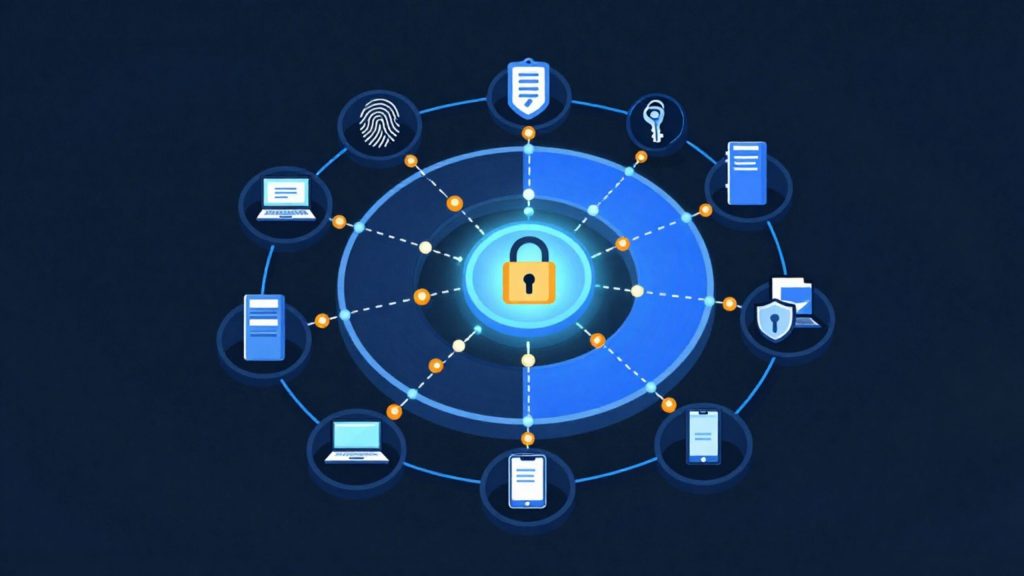
A traditional security mindset is no longer enough. The Zero Trust approach does not trust any user or device on the network by default. Every access request is verified, authorized and continuously monitored.
- Equinix Istanbul data center
- VMware-based infrastructure
- Veeam-based backup
- 99.9% availability target
- 15-min critical response target
- ISO 27001 · 22301 · 9001
Our Zero Trust Network Service
With MAV Cloud Zero Trust Network solutions, we integrate user authentication, device security, multi-factor authentication (MFA), micro-segmentation, network access control and the principle of least privilege into your organization.
This greatly reduces insider threats, compromised user accounts and unauthorized access, while making hybrid work and remote access scenarios secure.
Get a custom quote
Tell us what you need, and our expert team will get back to you as soon as possible.
- Phone+90 532 054 49 14
- Emailinfo@mavcloud.com.tr
Why MAV Cloud Zero Trust?
- Zero Trust architecture design
- Micro-segmentation
- Multi-Factor Authentication (MFA)
- Least privilege access model
- Identity and access management
- Secure remote access
- Continuous verification approach
- Enterprise security consulting
Core principles of Zero Trust network security
Zero Trust is not a product but an architectural approach that defines how access decisions are made. In the traditional model, users inside the network are trusted; in Zero Trust network security, location is not a reason for trust. In practice, four principles stand out:
- Continuous verification: access is evaluated not only at sign-in but throughout the session, as user identity, device posture and context (location, time, risk signals) change.
- Least privilege: every user and service account can access only the application it needs, for only as long as it needs it; standing admin privileges are reduced.
- Micro-segmentation: the network is divided into small zones at the workload and application level, making it harder for a compromised device to spread to adjacent systems (lateral movement).
- Assume breach: all access is logged and monitored, and the design assumes that any account could be compromised.
These principles apply not only to employees but also to service accounts, API connections, vendors’ remote access and branch devices. In a Zero Trust design, human and machine identities are evaluated by the same policy engine; whether an access request is allowed is decided by weighing identity, device and context signals together.
ZTNA vs. traditional VPN
ZTNA (Zero Trust Network Access) is Zero Trust applied to remote access. The key differences from a traditional VPN:
| Criterion | Traditional VPN | ZTNA |
|---|---|---|
| Access scope | A connected user can usually reach the entire network segment | Users see only the applications they are authorized for |
| Verification | Once, at connection time | Identity and device posture are evaluated continuously |
| Device checks | Limited or none | Conditions such as patch level, disk encryption and EDR presence can be required |
| Visibility | Session level | Application and request level |
ZTNA can be implemented with products from vendors such as Fortinet, Palo Alto Networks, Cisco and Microsoft; your existing firewall infrastructure is often the starting point for the transition.
A phased Zero Trust roadmap
- Identity foundation: MFA for all users, a central identity provider and separation of privileged accounts.
- Device trust: a corporate device inventory, endpoint security and device compliance conditions.
- Application access: application-based ZTNA access instead of VPN, starting with critical applications.
- Segmentation: splitting server and workload traffic into micro-segments and shutting down unnecessary east-west traffic.
- Monitoring and improvement: analyzing access logs with SIEM and log management and tightening policies based on usage data.
Each phase builds on the output of the previous one: you cannot write application access policies before device trust is defined, and you cannot set up segmentation rules correctly without an application inventory. Rather than affecting the whole company at once, the transition is first piloted in one department or on one critical application; the scope is expanded after observing the user experience and help desk tickets.
To measure success, a few indicators are set from the start: the share of users covered by MFA, the number of accounts with standing admin privileges, the number of applications accessed via ZTNA instead of VPN, and the number of allowed connection rules between segments. Tracking these indicators regularly keeps Zero Trust an ongoing security model rather than a one-off project.
Who is Zero Trust Network for?
- Companies with remote and hybrid teams
- Organizations using both cloud and on-premises systems
- Businesses that want to reduce the risk of unauthorized access
- Organizations looking to reduce their reliance on VPNs
Frequently asked questions about Zero Trust Network
What is Zero Trust?
Zero Trust is the principle that no user or device is trusted by default, whether inside or outside the network, and that every access request is verified.
How does the move to Zero Trust begin?
First, users, devices and applications are inventoried; then authentication, least privilege and segmentation steps are implemented gradually.
Do I need to replace my existing infrastructure?
Usually not. Zero Trust is an approach built in phases on top of your existing systems.
What is ZTNA?
ZTNA (Zero Trust Network Access) is a remote access model that connects users not to the network but only to the applications they are authorized for, while continuously verifying identity and device posture.
Does ZTNA completely replace VPN?
In most organizations the transition is gradual; critical applications move to ZTNA first, and VPN can be kept for specific scenarios for a while. The final design depends on your application inventory and user profiles.
Our other cybersecurity services
Firewall SolutionsWe design, manage and protect 24/7 your firewall infrastructure, your business's first line of defense, in line with enterprise security standards. MAV Cloud Firewall…Learn more
Endpoint Security (EDR / XDR)Modern cyberattacks now target user computers and servers. With MAV Cloud EDR/XDR, all of your endpoints are protected by advanced behavioral analysis and…Learn more

SIEM & Log ManagementCyberattacks often leave traces in log records. Analyzing these records correctly enables early detection of attacks. MAV Cloud SIEM and Log…Learn more
Vulnerability ScanningCyberattacks usually exploit unpatched systems and unknown security vulnerabilities. With MAV Cloud Vulnerability Scan, we scan your servers, network…Learn more

Penetration TestingWe find your security vulnerabilities before cyber attackers reach your systems. With MAV Cloud Penetration Testing (Pentest), your external network, internal network, web…Learn more
SOC ServiceCybersecurity isn't achieved just by buying products. It requires continuous monitoring, analysis and rapid response. With the MAV Cloud Security Operations Center (SOC) service…Learn more 
